A better future with technology is possible.
Center for Humane Technology is a nonprofit dedicated to ensuring that today's most consequential technologies, such as AI and social media, actually serve humanity.
We bring clarity to how the tech ecosystem works in order to shift the incentives that drive it.
2010

- Design Ethicist Tristian Harris noticed detrimental effects of attention-harvesting design.
- Created the presentation”A Call to Minimize Distraction amp; Respect Users’ Attention.
- Launched “Time Well Spent” movement.
2018


- Tristian Harris, Aza Raskin, and Randima Fernando found the Center for Humane Technology.
- Initial work focused on social media, but with the advent of generative AI - CHT expanded its focus.
2025

Today our independent non-profit is staffed by a team of experts able to identify and analyze the incentives driving harmful, misaligned technology - and develop interventions that pave the path to a better future for society.
Artificial Intelligence

Artificial intelligence is one of the most consequential technologies ever invented.
The pace of AI development is staggering, and the rollout is reckless, driven by powerful economic and geopolitical incentives.
The decisions we make today will impact our world for generations to come. To build a better future, we must first clarify the critical issues with artificial intelligence, and identify the key design choices that lay the foundation for a humane future with AI.
Artificial Intelligence: Pros & Cons

AI Text Tools
Examples:
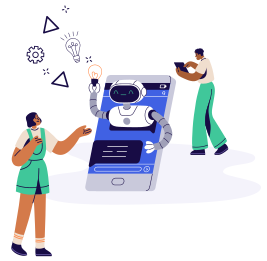
Chatbots: ChatGPT, Google Gemini, Microsot CoPilot, Claude, Etc.
Pros
24/7 Availability
Instant support and around the clock customer service.
Cost Efficiency
They can reduce operational cost by handling a large number of customer queries, decreasing the need for human staff.
Data insights
Collect and analyze data on customer behavior and preferences, in order to improve services and personalize experiences.
Cons

Lack of Emotional Intelligence
Chatbots struggle to understand human emotion and provide empathetic reponses, which can lead to poor customer experience.
Security and Privacy concerns
Collecting customer data raises concerns about data security and how that information is protected.
Implementation and maintenance
Setting up and maintaining a chatbot requires time, resources, and continuous updates to be effective.
The Big Picture
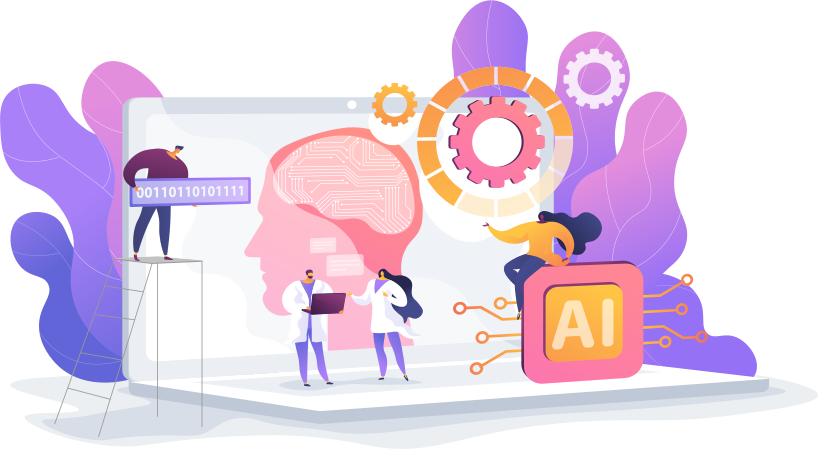
Artificial intelligence is a highly consequential general purpose technology.
Because of that, how we design, deploy, and use AI will determine the impact it has on us and our society. By realigning the incentives behind this powerful technology and designing more responsible products, humanity can reap the benefits of AI without dystopian results.
Center for Humane Technology works to realign these incentives by:
Creating Awareness
The public must understand the forces that drive the race to AI, and how the race impacts each of us. With awareness, the public can demand action from tech companies and policymakers while using AI products more mindfully.
Driving Policy Changes
Policy interventions remain one of the most impactful levers to drive change – especially if they incentivize safer AI development from the outset.
Promoting Better Tech Design
At the core of any tech product is its design. We have the ability to design tech products differently, where safety standards prioritize personal and societal well-being.
Donate
Support our Work
We can shape AI and Social Media for the world we want.
AI is transforming our lives, but it doesn’t have to be driven by profit or speed alone. With the right guidance, these systems can uplift human values, strengthen our communities, and support a thriving future.
Your tax-deductible donation fuels this vision and is critical to our work at CHT helping to uplift clarity, create opportunities for agency, and convene bold conversations that empower policymakers, technologists, and everyday people to guide AI toward the public good.
This is a moment of possibility. With your support, we can ensure that technology serves humanity—not the other way around.
Social Media
Technology, Psychology, and Incentive Driven Design
CHT’s legacy work includes dissecting how addictive design features on social media — including red notifications, algorithmic curation, intermittent reinforcement, and infinite scroll — all work to manipulate human psychology, and keep you on the platform for as long as possible.
This Is Your Brain On Social Media
Using social apps like Tik Tok, Instagram, Twitter, or Facebook for 10 minutes can raise Oxytocin levels in the blood as much as 13%.
Oxytocin
Constant notifications from social profiles and mobile devices act like “reward cues.”
We are trained to expect information, and receiving that information activates a region of our brain called the nucleus accumbens.
This is the same area that is activated when the brain processes feelings about food, sex, and money!
Our bodies also receive adrenaline from checking in on social media...
This makes it addictive!
A survey of 18-85 year olds found:
A majority of people found social media harder to resist than